Bi-weekly vs semi-monthly pay stubs
Bi-weekly pay means every other week, 26 paychecks a year (27 in some years). Semi-monthly pay means twice a month on fixed dates such as the 15th and the last day, 24 paychecks a year. On the same salary, each semi-monthly check is larger, but bi-weekly gives you two extra checks a year.
The choice changes what goes on every stub: the period dates, the gross per check, how overtime is counted and how YTD grows.
The four common pay frequencies
Annual salary divided by periods gives gross pay per stub. For $60,000 a year:
- Weekly: 52 checks of $1,153.85
- Bi-weekly: 26 checks of $2,307.69
- Semi-monthly: 24 checks of $2,500.00
- Monthly: 12 checks of $5,000.00
Bi-weekly pay on a stub
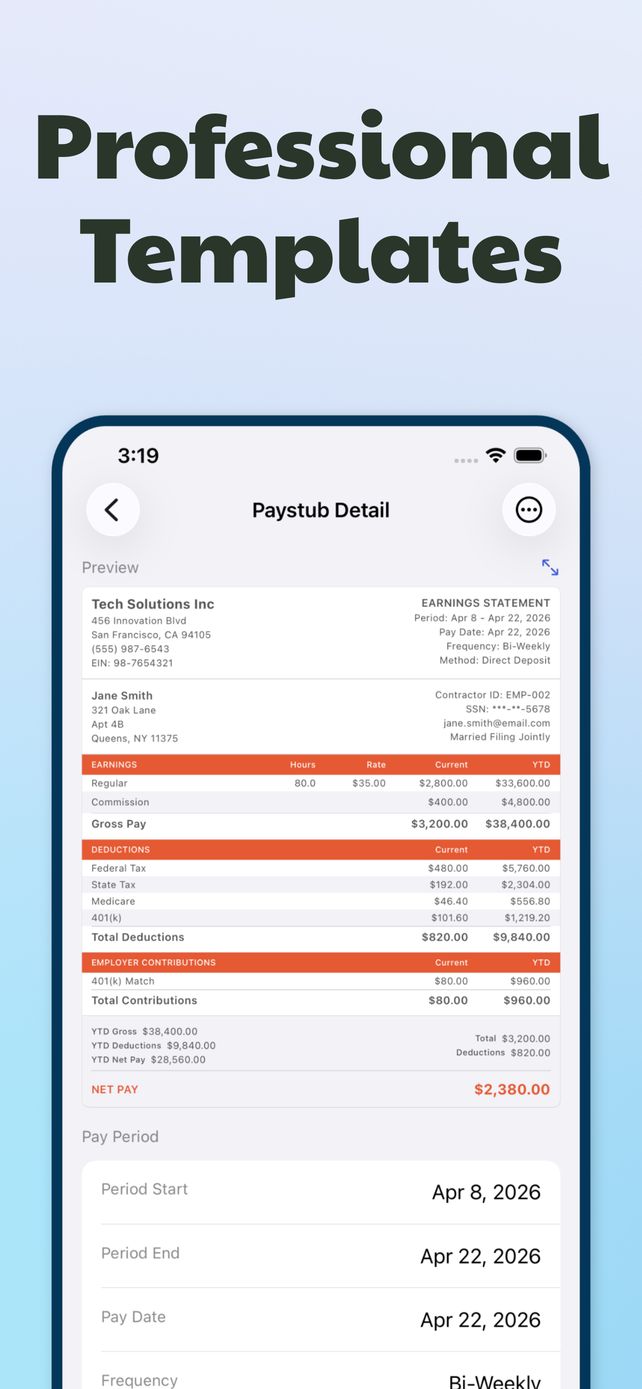
A bi-weekly stub always covers 14 days, for example Apr 8 to Apr 22 on the sample below, and lands on the same weekday. Hourly pay fits naturally: two workweeks, 80 regular hours. Overtime is counted per workweek, so 45 hours then 35 hours is 5 overtime hours even though the total is 80.
Twice a year a month has three paydays. Many people budget on two checks a month and treat the extra two as savings.
Semi-monthly pay on a stub
Semi-monthly periods are 1st to 15th and 16th to month end, so they run 13 to 16 days and the payday weekday moves around. Salaried pay is simple: annual ÷ 24. Hourly pay is awkward because workweeks cross period boundaries, which is why hourly-heavy businesses tend to choose bi-weekly.
What changes in YTD and taxes
Annual totals are the same either way. Per-check withholding differs because the IRS tables are built per pay frequency, so a larger semi-monthly check has larger withholding, and it all evens out over the year.
For YTD, count the stubs: by the end of June a bi-weekly worker usually has 13 stubs and a semi-monthly worker has 12. If someone compares YTD between two jobs with different frequencies, that's why the numbers don't line up month to month.
Setting the frequency on your stub
Pick the frequency that matches how the money actually moves, then keep it. When you duplicate a stub for the next period, the frequency carries over and only the dates and amounts change. Weekly, bi-weekly and monthly are all supported.
Questions
Is bi-weekly or semi-monthly better for employees?
Same annual pay either way. Bi-weekly gives a predictable weekday and two three-paycheck months; semi-monthly lines up with rent and bills due on fixed dates.
How many pay periods are there in a bi-weekly year?
Usually 26. Every 11 years or so the calendar produces 27 bi-weekly paydays, which slightly lowers each check for salaried staff if the employer divides by 27.