
Proof of income for self-employed people

Self-employed people prove income with a combination of documents: the last one or two tax returns (Form 1040 with Schedule C), 1099 forms from clients, recent bank statements showing deposits, a year-to-date profit and loss statement, and pay stubs you issue yourself. No single document does it alone; together they show income that is real, regular and recent.
Below is what each document proves and how to put them together so a landlord or lender can say yes quickly.
The documents and what each one proves
Reviewers check three things: is the income real, is it steady, and is it current.
- Tax returns (1040 + Schedule C): real and verified, but up to a year old
- 1099-NEC / 1099-K: who paid you and how much, yearly
- Bank statements (2 to 3 months): current deposits, but raw and hard to read
- Profit and loss statement: this year so far, in summary
- Pay stubs: regular, readable, current, but only credible if they match the rest
What landlords usually ask for
Many landlords use a rule like gross monthly income of about three times the rent. They're used to two or three recent pay stubs from employees, so giving them stubs in the same format makes your application easy to process. Back them with bank statements for the same months so each stub's net pay matches a deposit.
If the landlord also asks for last year's return, send it. A short note explaining your work ("freelance designer, three retainer clients") helps more than people expect.
What lenders usually ask for
Mortgage lenders typically want two years of personal (and sometimes business) tax returns from self-employed borrowers, and they average the income. Pay stubs you made yourself won't replace those, but a clean year-to-date summary helps when this year's income differs from last year's.
Car loans and credit cards are usually lighter: recent bank statements and a recent return, sometimes stubs.
Make your pay stubs back up the paperwork
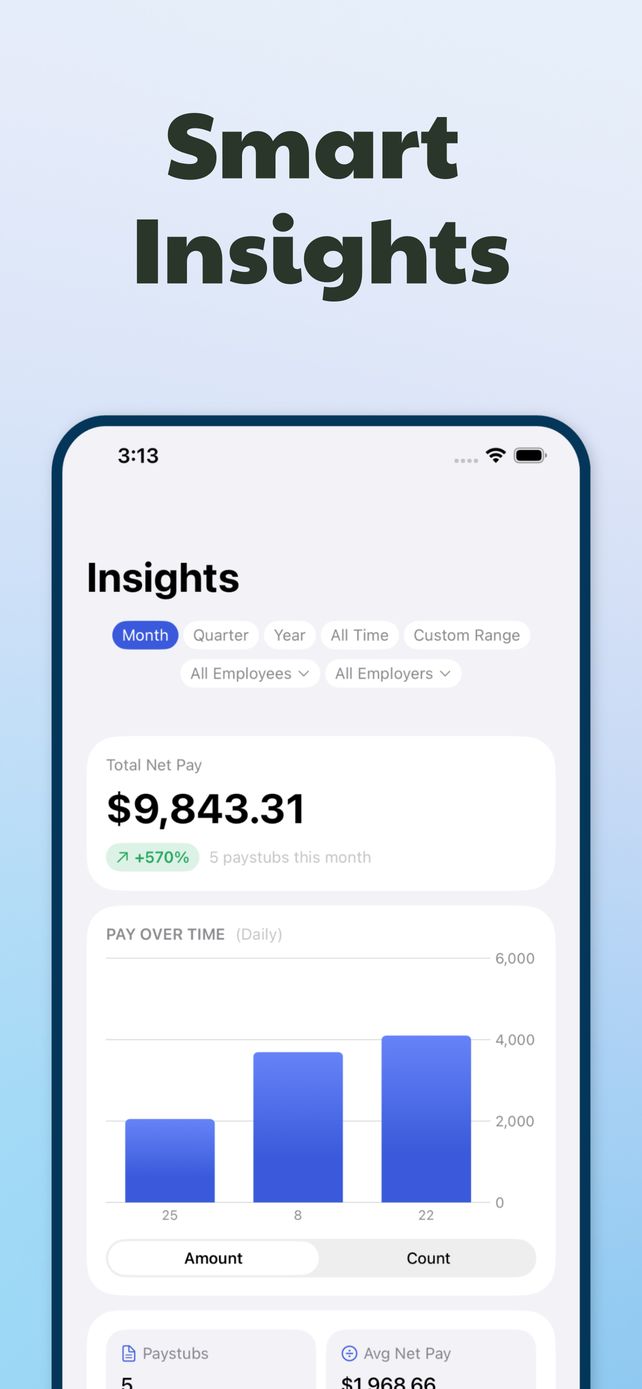
Issue stubs on a schedule, for the amounts you actually transferred to yourself, and keep YTD totals running. In the app, Insights totals your net pay by month, quarter or year, which makes it quick to answer "what did you earn this year so far?" and to check it against your bank deposits.
Most importantly, never make a stub with income you didn't earn. Inflated stubs get caught against bank statements and tax transcripts, and using them on a lease or loan application is fraud.
A simple proof-of-income package
For a rental application, send one PDF set in this order:
- The last two or three pay stubs
- Bank statements for the same months, with matching deposits highlighted
- Last year's tax return first page and Schedule C
- 1099s from your main clients, if you have them
Questions
Can I use bank statements instead of pay stubs?
Often, yes. Many landlords accept two or three months of statements. Stubs make the income easier to read, so sending both is stronger than either alone.
How do I prove income if I just started freelancing?
Use signed contracts or offer letters from clients, invoices, bank deposits since you started, and a year-to-date P&L. Some landlords will ask for a larger deposit or a co-signer.
Related guides
 How to make a pay stub if you're self-employedPayer, payee, owner's draw and tax set-asides, done so the numbers hold up.
 1099 independent contractor pay stub: what to includeContractors don't get stubs. Make one that matches your 1099s.
 How to make a pay stub on iPhoneFour steps from blank form to a PDF you can email, text or print.